 By Admin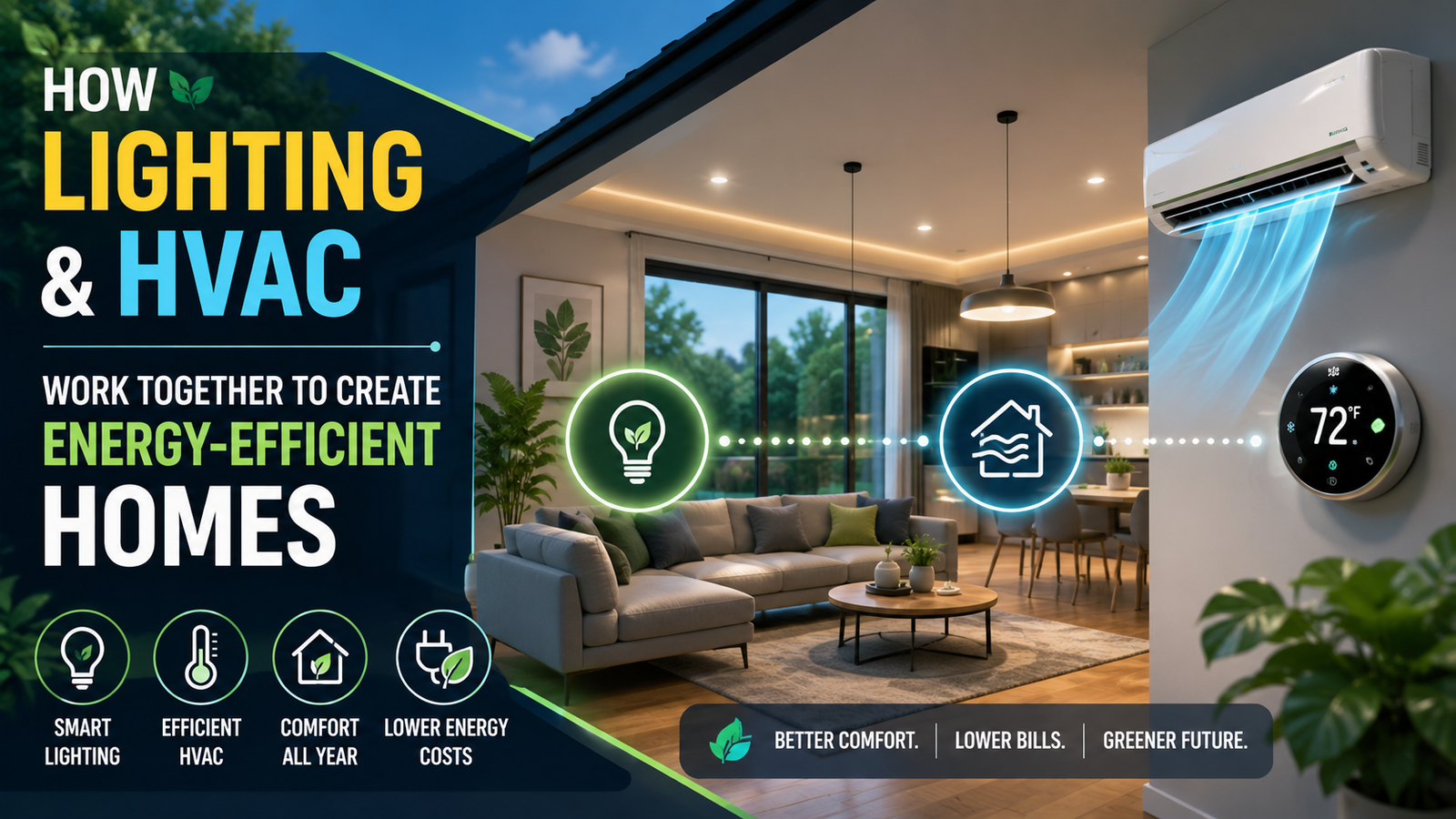
Creating an energy-efficient home involves much more than replacing old light bulbs or upgrading to a modern heating and cooling system. Every component of a home’s design works together to influence energy consumption, indoor comfort, and long-term operating costs. Among the most important systems are lighting and HVAC (heating, ventilation, and air conditioning), which together account for a significant portion of household energy use.
When these systems are designed and managed with efficiency in mind, homeowners can enjoy lower utility bills, improved indoor comfort, better air quality, and a reduced environmental impact. Understanding how lighting and HVAC complement each other is the first step toward creating a healthier and more sustainable living space.
This article explores the relationship between lighting and HVAC systems, explains how they influence one another, and outlines practical strategies for improving overall home energy efficiency.
Why Whole-Home Energy Efficiency Matters
Many homeowners focus on improving one aspect of their home at a time, such as replacing outdated appliances or installing programmable thermostats. While these upgrades are beneficial, the greatest energy savings often come from viewing the home as a complete system.
Lighting affects the amount of heat generated inside a home, while HVAC systems respond to changes in indoor temperature and humidity. Together with insulation, windows, ventilation, and air sealing, these systems determine how much energy a home consumes throughout the year.
A coordinated approach helps maximize efficiency while maintaining comfortable indoor conditions.
The Connection Between Lighting and Indoor Temperature
Lighting does more than illuminate a room—it also generates heat.
Traditional incandescent bulbs convert a large portion of electricity into heat rather than visible light. In warm climates or during summer months, this additional heat increases the workload on air conditioning systems because the HVAC equipment must remove that excess heat to maintain a comfortable indoor temperature.
Modern lighting technologies, such as LED fixtures, produce significantly less heat while delivering the same or better brightness. By reducing internal heat gain, LED lighting can indirectly lower cooling demand and improve the overall efficiency of an HVAC system.
Why LED Lighting Supports HVAC Efficiency
LED lighting has become a popular choice for homeowners because of its long lifespan and reduced electricity consumption. An additional advantage is its ability to minimize heat output.
Benefits of LED lighting include:
- Lower electricity use
- Reduced indoor heat generation
- Longer bulb lifespan
- Less frequent replacements
- Improved lighting quality
- Lower maintenance costs
When combined with an efficient HVAC system, LED lighting helps create a home that is both comfortable and cost-effective to operate.
HVAC Systems Play a Central Role in Home Efficiency
Heating and cooling systems are often the largest energy consumers in residential buildings. Their performance depends on several factors, including equipment efficiency, maintenance, insulation, and the amount of heat entering the home.
Modern HVAC systems include technologies designed to reduce energy use, such as:
- Variable-speed compressors
- Smart thermostats
- Zoned temperature control
- High-efficiency air filters
- Energy recovery ventilation
- Variable-speed air handlers
These features allow HVAC systems to respond more precisely to changing indoor conditions, reducing unnecessary energy consumption.
Smart Home Technology Brings Systems Together
One of the biggest trends in residential energy efficiency is the integration of smart home technology.
Connected devices now allow homeowners to manage lighting and HVAC systems through a single platform.
Examples include:
- Smart thermostats
- Automated lighting schedules
- Occupancy sensors
- Voice-controlled assistants
- Mobile energy monitoring apps
These technologies help ensure lights and climate control systems operate only when needed, reducing wasted energy without sacrificing comfort.
Natural Light Reduces Energy Demand
Natural daylight remains one of the most effective ways to reduce lighting costs.
Homes designed to maximize daylight often require less artificial lighting during daytime hours.
Strategies include:
- Larger energy-efficient windows
- Skylights
- Solar tubes
- Open floor plans
- Reflective interior finishes
Proper daylighting not only reduces lighting energy use but can also improve mood, productivity, and overall well-being.
However, excessive sunlight can increase indoor temperatures. High-performance windows, exterior shading, and insulated glazing help balance natural lighting with thermal efficiency.
Proper Insulation Supports Both Lighting and HVAC Efficiency
Even the most efficient HVAC equipment cannot compensate for a poorly insulated home.
Insulation reduces unwanted heat transfer, helping maintain consistent indoor temperatures.
Common insulation improvements include:
- Attic insulation
- Wall insulation
- Floor insulation
- Air sealing
- Weatherstripping around doors and windows
By minimizing heat gain during summer and heat loss during winter, insulation reduces the demand placed on heating and cooling systems.
Indoor Air Quality Is Part of Energy Efficiency
Efficient homes should also provide healthy indoor environments.
Modern HVAC systems improve indoor air quality through:
- Air filtration
- Ventilation
- Humidity control
- Air circulation
Clean indoor air contributes to:
- Better respiratory health
- Reduced allergens
- Improved sleep
- Increased comfort
- Enhanced productivity for people working from home
A well-maintained HVAC system helps achieve these benefits while operating efficiently.
Maintenance Keeps Systems Performing at Their Best
Regular maintenance is essential for preserving the efficiency of both lighting and HVAC systems.
For HVAC equipment, preventive maintenance typically includes:
- Replacing air filters
- Cleaning coils
- Inspecting refrigerant levels
- Calibrating thermostats
- Checking electrical components
- Evaluating airflow
- Cleaning condensate drains
Routine service helps maintain peak efficiency while reducing the likelihood of unexpected breakdowns.
Homeowners searching for dependable hvac pearland professionals often schedule seasonal maintenance before periods of heavy cooling demand. Preventive inspections help ensure systems operate efficiently while minimizing energy consumption.
Choosing Energy-Efficient Lighting Fixtures
Lighting fixtures themselves influence overall energy performance.
Homeowners can improve efficiency by selecting fixtures that:
- Use LED technology
- Include dimming capabilities
- Support occupancy sensors
- Direct light where needed
- Meet recognized energy-efficiency standards
Proper fixture placement also reduces the number of lights required to illuminate a space effectively.
Zoning Improves Home Comfort
Not every room in a home requires the same amount of heating or cooling.
Zoned HVAC systems divide the home into separate climate-controlled areas.
Benefits include:
- Lower energy use
- Improved comfort
- Reduced equipment wear
- Customized temperature settings
When paired with room-specific lighting controls, zoning creates an efficient living environment tailored to daily occupancy patterns.
Energy Monitoring Helps Homeowners Make Better Decisions
Many homeowners underestimate how much energy they consume.
Modern monitoring systems provide real-time information about:
- HVAC energy use
- Lighting consumption
- Indoor temperatures
- Humidity levels
- Peak electricity demand
Access to this data makes it easier to identify opportunities for reducing energy waste.
Planning for Long-Term Savings
Creating an energy-efficient home is an ongoing process rather than a one-time project.
Property owners can prioritize improvements based on budget and expected return on investment.
Common upgrades include:
- LED lighting conversion
- Smart thermostats
- HVAC replacement
- Improved insulation
- Window upgrades
- Air sealing
- Smart home integration
Each improvement contributes to lower utility bills and increased long-term comfort.
Many homeowners looking for reliable hvac league city services also choose to evaluate overall home efficiency during HVAC upgrades. Combining heating and cooling improvements with better lighting and insulation often delivers greater energy savings than addressing each system separately.
Environmental Benefits of Energy-Efficient Homes
Reducing household energy consumption benefits more than monthly utility bills.
Energy-efficient homes help:
- Lower greenhouse gas emissions
- Reduce strain on electrical grids
- Conserve natural resources
- Support long-term sustainability goals
Small improvements made across millions of homes can collectively create a significant environmental impact.
Frequently Asked Questions
How does lighting affect HVAC performance?
Traditional lighting produces heat, which can increase indoor temperatures and force air conditioning systems to work harder. Energy-efficient LED lighting generates less heat, reducing cooling demand.
Why are LED lights more energy efficient?
LEDs consume less electricity, produce less heat, last longer than traditional bulbs, and require less maintenance, making them one of the most efficient lighting options available.
How can smart technology improve energy efficiency?
Smart thermostats, automated lighting controls, occupancy sensors, and energy monitoring systems optimize energy use by adjusting lighting and climate control based on occupancy and schedules.
Why is HVAC maintenance important?
Routine maintenance improves airflow, keeps equipment operating efficiently, reduces energy consumption, extends system lifespan, and helps prevent unexpected repairs.
What is the biggest factor in creating an energy-efficient home?
The best results come from combining multiple improvements, including efficient HVAC systems, LED lighting, quality insulation, air sealing, smart controls, and regular maintenance.
Conclusion
Lighting and HVAC systems are closely connected when it comes to creating an energy-efficient home. Efficient lighting reduces unnecessary heat, while modern HVAC systems maintain comfortable indoor temperatures using less energy. Together, they form the foundation of a home that is more comfortable, more economical to operate, and better prepared for the future.
By viewing a home as an integrated system and investing in thoughtful upgrades such as LED lighting, smart controls, proper insulation, and routine HVAC maintenance, homeowners can reduce energy waste while improving indoor comfort and air quality. As technology continues to advance, the partnership between lighting and climate control will play an even greater role in building healthier, more sustainable homes.