 By Admin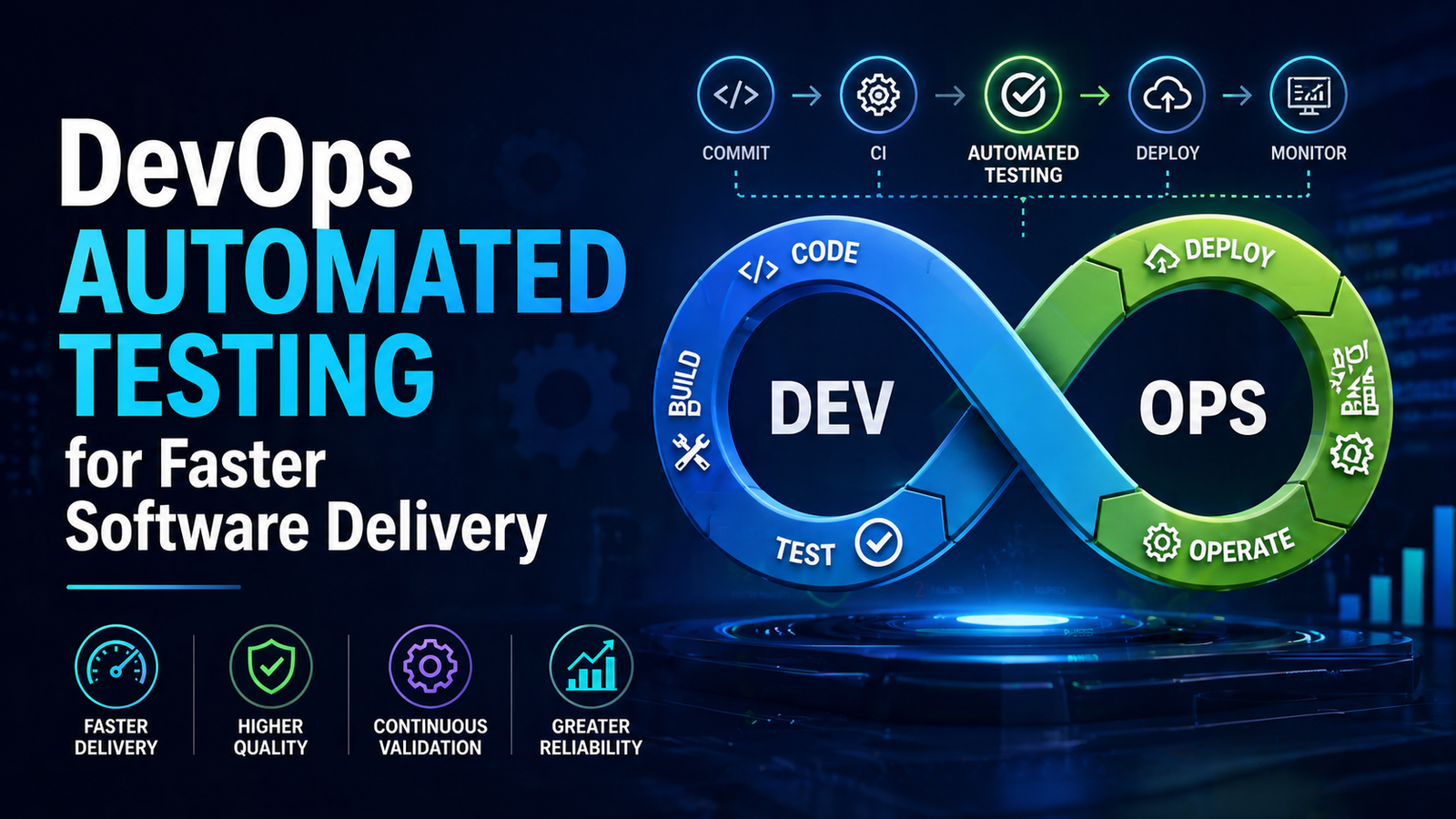
Software delivery is no longer handled as a fixed release event. It now runs as an ongoing part of day-to-day operations. Product teams are expected to push updates faster, reduce defects earlier, and maintain stability as environments become more distributed. That shift has made testing central to delivery planning compared with older release models. What used to happen near the end of development now has to work alongside coding, integration, deployment, and monitoring.
This is where DevOps starts to change how quality is handled. Testing is no longer treated as a checkpoint owned by a separate function. It is tied to build pipelines, commit workflows, environment validation, and release confidence. For teams handling microservices, API changes, cloud-native deployments, and frequent product iterations, speed without dependable test coverage creates avoidable risk. That is why DevOps automated testing is moving to a core delivery discipline.
Why DevOps Automated Testing Is Changing Release Expectations Across Engineering Teams
The value is not limited to catching bugs faster. Automated quality checks help teams make smaller releases with less hesitation. Instead of waiting for broad manual validation cycles, engineering teams can verify critical behaviors as changes move through the pipeline. That changes planning, coordination, and how risk is discussed in delivery meetings.
A few delivery shifts are pushing this forward:
- Faster commits need quicker verification before code reaches shared branches and staging.
- Release frequency increases pressure on teams to validate changes without slowing delivery.
- Distributed systems create more integration points where hidden failure can surface later.
When these pressures build, teams cannot rely on manual testing alone. Pattem Digital sees this in businesses trying to scale engineering output while keeping release quality predictable. The issue is the absence of a testing model that fits continuous delivery.
Where Automated Test Pipelines Create Measurable Value Beyond Basic QA Coverage
The strongest benefit of automated testing inside DevOps is operational clarity. Teams gain early signals on whether code is stable, whether environments are aligned, and whether regressions are spreading across services. This reduces rework and makes defect handling less disruptive.
- Stable regression checks reduce revalidation work before releases across linked systems.
- Pipeline-based checks improve confidence when multiple teams ship into shared environments.
- Automated suites flag broken flows quickly, giving developers clearer feedback during active sprints.
That does not mean every test should be automated. High-value coverage comes from selecting flows that affect revenue, core functionality, customer experience, and system dependency. Smoke tests, integration checks, API validation, and UI regressions provide stronger returns than trying to automate every scenario.
For businesses also investing in cloud consulting services, test automation becomes more relevant. Cloud movement increases environment complexity, service dependencies, and deployment speed. Without structured validation, those benefits can be offset by instability.
What Teams Commonly Miss When They Try to Scale Test Automation Too Quickly
A common mistake is assuming tool adoption alone will solve release friction. It rarely does. Weak test design, unstable environments, unclear ownership, and poor data handling can make an automated suite noisy and unreliable. When that happens, developers stop trusting the pipeline, and the process becomes another source of delay.
Teams need to fix several basics first:
- Test environments should reflect real deployment conditions closely enough to expose risk early.
- Ownership must be shared so testing is not pushed back to QA after pipeline failures appear.
- Suites need regular maintenance, or they become slow, brittle, and easy to ignore.
Pattem Digital approaches this area as a delivery problem, not just a tooling decision. The aim is to create a test process that supports release flow, engineering trust, and change management. That is why automated testing in DevOps should be designed around business-critical delivery paths.
How DevOps Automated Testing Supports Faster Software Delivery Without Lowering Control
When done well, automated testing removes waiting time from delivery. Developers get faster feedback, release managers gain clearer approval signals, and product teams avoid large batches of uncertainty. That creates momentum without forcing teams to compromise on quality.
The results become clear in several areas. Issues are caught earlier, closer to when changes are made. Teams can assess release readiness with more confidence, and rollback risk stays lower because key checks are part of the workflow. Businesses using DevOps development services often see stronger outcomes when testing is connected to CI/CD, deployment rules, and monitoring.
Pattem Digital works with organizations that need engineering speed without creating avoidable strain. In that setting, continuous testing practices matter because they support delivery discipline as much as quality.
Why This Shift Matters More as Software Delivery Becomes Continuous and Multi-Layered
The stronger question is no longer whether teams should automate testing. It is how deeply testing should be embedded into the delivery model. As release cycles shrink and architectures become layered, quality checks need to move earlier, run more consistently, and support real deployment decisions. DevOps automated testing is becoming essential because modern delivery leaves less room for slow feedback, fragmented validation, and late surprises. For teams that want faster software delivery without losing control, the direction is becoming harder to ignore.