 By Admin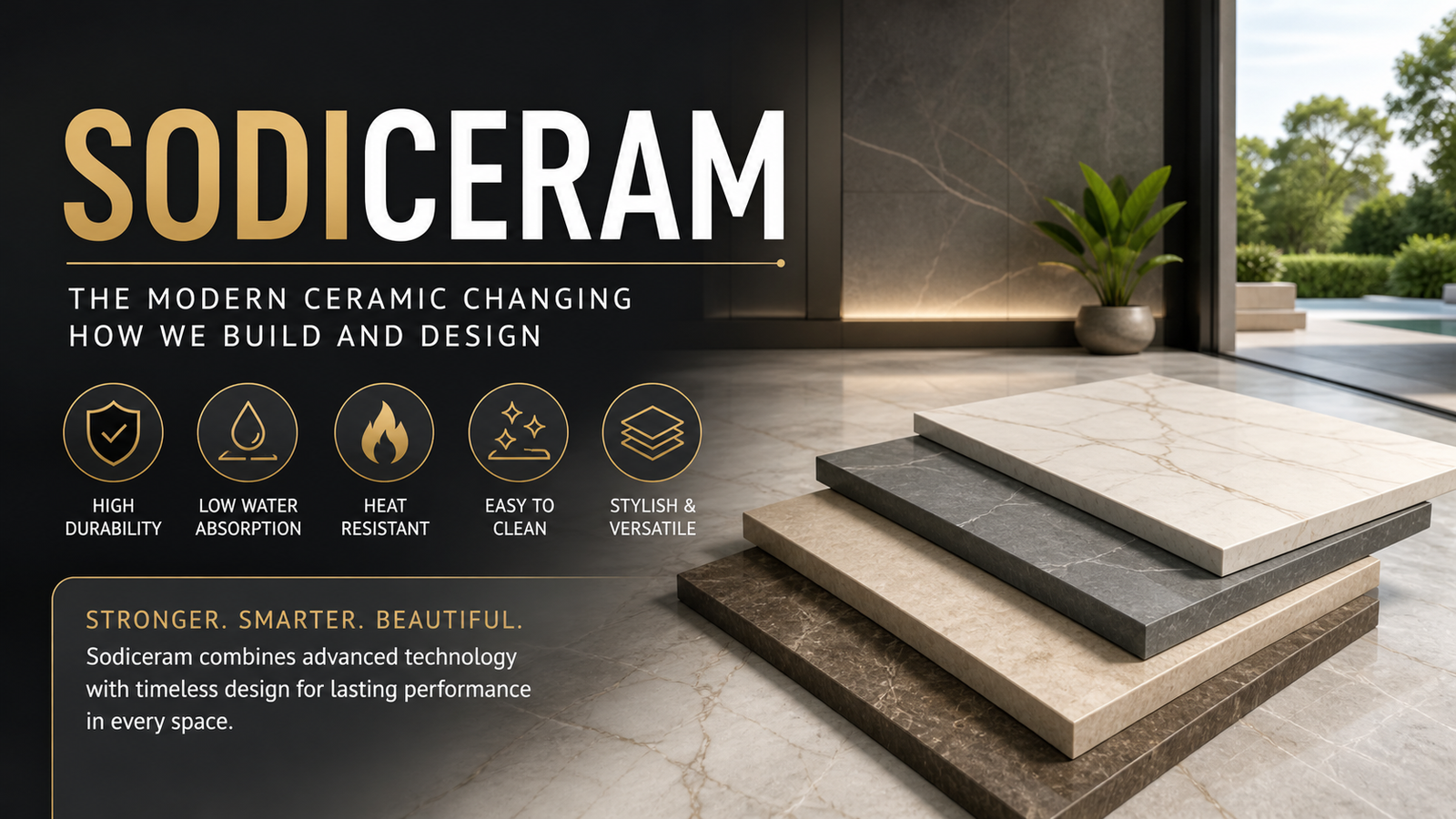
You’ve probably seen the word “sodiceram” floating around — maybe in home design blogs, maybe in construction discussions… maybe even in product listings that look a bit too polished.
And you pause. Like… wait, what is this thing?
Is it just another fancy name for tiles? Or something actually different?
Let’s talk about it — properly, but without making it feel like a science textbook.
What Is Sodiceram (In Simple Words)
At its core, sodiceram is a modern, high-performance ceramic material enhanced with sodium-based compounds.
That might sound technical… but here’s the real idea:
It’s basically ceramic 2.0 — stronger, denser, and more durable than traditional ceramic.
Unlike old-school ceramics (which can crack, absorb water, or wear out), sodiceram is engineered to fix those problems by improving its internal structure.
And yeah… that’s why it’s getting attention.
Why the Name “Sodiceram”?
The name actually tells you everything — if you look closely.
- “Sodi” → comes from sodium
- “Ceram” → comes from ceramic
Put them together… and you get a sodium-enhanced ceramic material.
Simple. But clever.
How Sodiceram Is Made (Without Getting Too Technical)
Let’s not overcomplicate this.
The process is similar to traditional ceramics — but with a few important upgrades:
- Natural materials like clay, silica, and minerals are used
- Sodium compounds are added to improve bonding
- Everything is fired at high temperatures
- The result? A denser, stronger material
The sodium acts like a helper, making the ceramic melt and fuse better — which reduces tiny air pockets inside.
And fewer air pockets = stronger material.
Key Features of Sodiceram
This is where things get interesting.
Why people are switching to sodiceram:
- High durability – resists cracks, chips, and wear
- Low water absorption – less moisture damage
- Heat resistance – handles extreme temperatures
- Smooth, dense surface – easy to clean
- Design flexibility – can mimic wood, marble, or stone
All of this comes from its improved structure and lower porosity compared to standard ceramics.
Quick Comparison Table
Here’s a simple way to understand where sodiceram stands:
| Feature | Sodiceram | Traditional Ceramic | Natural Stone |
|---|---|---|---|
| Strength | High | Medium | Medium |
| Water Absorption | Very Low | Moderate | Variable |
| Maintenance | Easy | Moderate | High |
| Durability | Long-lasting | Average | Depends |
| Cost | Medium–High | Low–Medium | High |
So yeah… it sits right in that “modern upgrade” category.
Where Sodiceram Is Used
You might not realize it, but sodiceram is already showing up in a lot of places.
Common Uses:
- Flooring (homes, offices, malls)
- Wall tiles (kitchens, bathrooms)
- Countertops
- Exterior facades
- Commercial spaces with heavy traffic
Its strength and water resistance make it ideal for both indoor and outdoor use.
And honestly… it’s one of those materials that looks good and performs well. Not always an easy combo.
Types of Sodiceram Finishes
Not all sodiceram looks the same. You’ve got options — and they matter.
Common finishes:
- Glossy finish
- Shiny, reflective
- Best for modern interiors
- Matte finish
- Soft, non-slip
- Great for bathrooms or kitchens
- Textured finish
- More grip
- Ideal for outdoor areas
So yeah… it’s not just about strength. It’s also about style.
Why Sodiceram Is Becoming Popular
There’s a reason this term keeps popping up.
Actually… a few reasons.
1. It Solves Old Problems
Traditional ceramics had limitations:
- Cracking
- Water damage
- Wear over time
Sodiceram improves all of that.
2. It Looks Premium (Without Being Too Fragile)
You get the look of:
- Marble
- Stone
- Wood
…but without the maintenance headache.
3. It’s More Energy Efficient to Produce
Here’s something people don’t always talk about.
Sodiceram can be fired at lower temperatures — which can reduce energy use by around 15–25%.
That’s a big deal in manufacturing.
4. It Fits Modern Design Trends
Minimalism. Clean surfaces. Durable materials.
Sodiceram checks all those boxes.
Things to Keep in Mind (Before Choosing It)
Alright — it’s not perfect. Nothing is.
Here are a few things to consider:
- It can be more expensive than regular ceramic
- Quality may vary between manufacturers
- It’s still an emerging category (not fully standardized yet)
So yeah… do your homework before buying.
Simple Buying Checklist
If you’re thinking about using sodiceram, keep this in mind:
- ✔ Check durability ratings
- ✔ Look at water absorption levels
- ✔ Choose the right finish for your space
- ✔ Ask for technical specs (important!)
- ✔ Compare brands — not all are equal
A little extra effort here… saves a lot later.
Is Sodiceram Better Than Regular Ceramic?
Short answer?
In most cases — yes.
But it depends on what you need.
- For low-budget projects → traditional ceramic works fine
- For long-term durability → sodiceram is a stronger choice
It’s less about “better” and more about fit.
The Future of Sodiceram
This part is kind of exciting.
Sodiceram isn’t just a trend — it’s part of a bigger shift toward:
- Smarter materials
- Sustainable production
- High-performance design
As technology improves, we’ll probably see even better versions of it.
Stronger. Lighter. Maybe even more eco-friendly.
Final Thoughts (A Bit Real, Not Too Perfect)
So yeah… sodiceram isn’t just another buzzword.
It’s a mix of:
- science
- design
- and practical problem-solving
And honestly… that’s why it works.
It takes something old — ceramic — and makes it fit modern life a little better.
Not revolutionary in a flashy way.
But quietly useful.
And sometimes… that’s exactly what matters.