 By Admin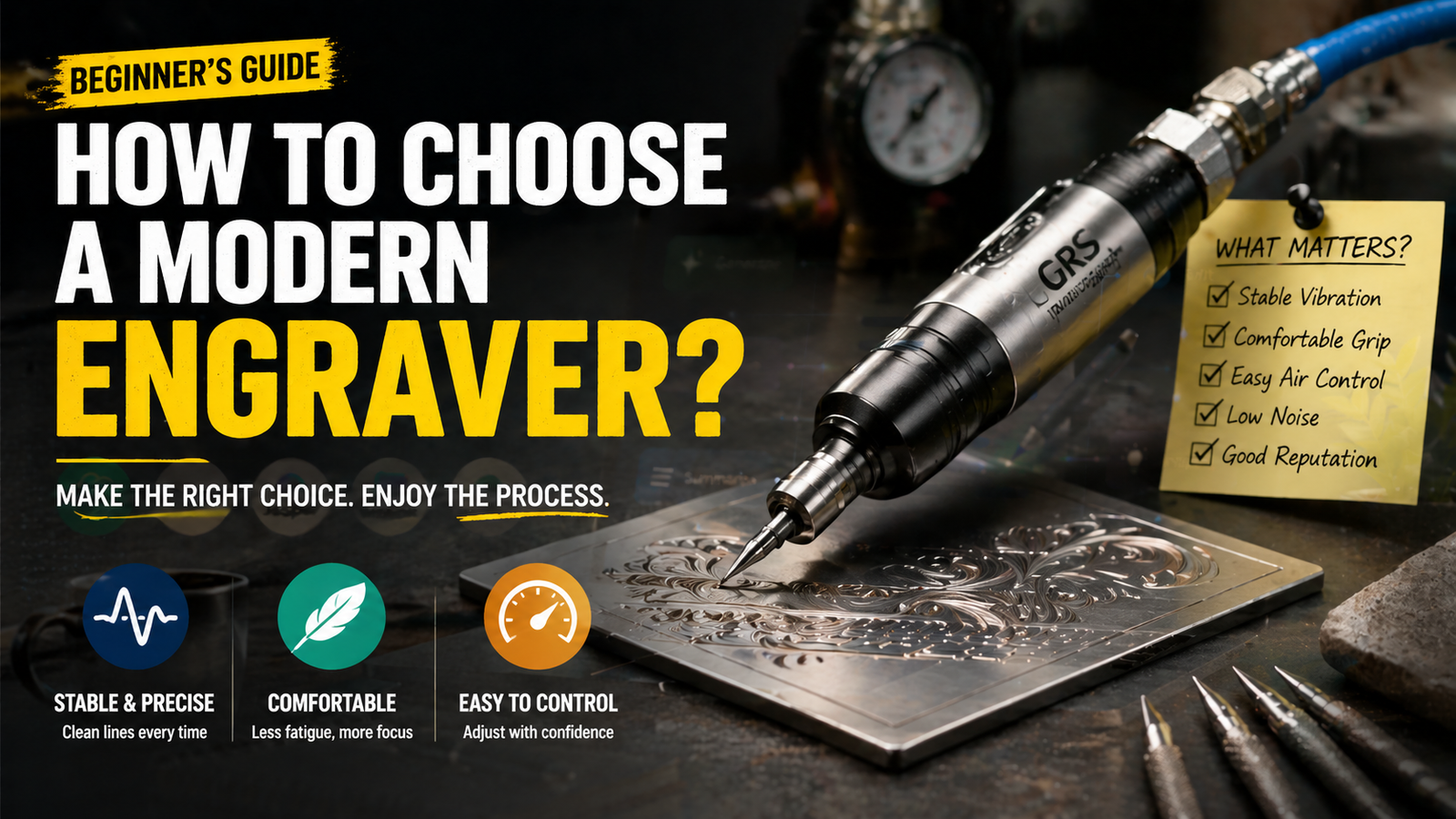
I’m serious—if you’re reading this on your phone trying to figure out which engraver to buy as a beginner, you’re probably already overwhelmed by all the recommendations online. I’ve been there. No joke.
One post says hand engraving has the most feel, and carvings done that way have “soul.” Another review says electric is good enough, no need for pneumatic. Then you watch a video, and the guy just goes, “Just go straight to a pneumatic engraver and be done with it.” I was so confused.
And guess what—I made the wrong choice.
I wasted money on something that was neither here nor there. It vibrated so bad my hand went numb, my lines came out all crooked, and it almost made me give up on engraving entirely. I actually started thinking, “Maybe I’m just not cut out for this.”
So in this post, I’m not going to throw a bunch of technical specs at you. I’ll just walk you through the mistakes I made, one by one, so you can avoid them. Seriously, picking the right tool saves you so much trouble.
Why picking the wrong engraver can instantly discourage a beginner?
A lot of people, when they first start learning to carve and mess up, immediately think, “I just don’t have the talent.” But I don’t think that’s it. Most of the time, honestly, it’s not you—it’s the tool you’re using that’s working against you.
Take me, for example. At first, I used those basic hand gravers, and the problems just kept piling up. Hitting a harder spot meant I had to push down harder, and as soon as I did, the blade would slip sideways—completely out of control. The lines I carved were uneven, some deep and some shallow, looking like a worm had crawled across the material. It looked terrible. So for a while, I kept questioning myself: “Maybe I’m just not cut out for this? How come other people carve so smoothly, but every time I try, I totally screw up? Why? Why?!”
Then later, I couldn’t give up. I switched to a tool that actually worked well for me, and that’s when it hit me—it wasn’t that I was bad. It was that the tool I’d been using was holding me back the whole time. Go figure. At the end of the day, it really wasn’t my fault.
Three common engraving methods beginners really need to know
Before you spend any money on tools, you should at least understand the three mainstream engraving methods out there. Let me break them down for you one by one.
First is hand engraving. You push the graver with pure muscle power. The upside is it’s cheap and low-barrier—just buy a graver and you’re ready to go. But the downsides are very real: it’s way too dependent on a steady hand. Your wrist twitches even a little, and the whole line goes crooked. Pressure control is also tough for beginners—going deep or shallow is all based on feel. What’s it good for? Just experiencing the basics and practicing simple lines. Don’t expect to do anything too detailed with it.
Second is electric engraving. A lot of beginners pick this because it sounds more advanced than hand engraving, and it does save some effort. But once you’ve used it for a while, you’ll notice the vibration is really strong—the tip just buzzes around all over the place. It’s okay for rough work, but when you get to fine details, it falls apart fast. Try carving small letters or delicate edges, and you’ll easily get chipping or distortion.
Third is the pneumatic engraver. I only came across this one later. It’s not complicated—basically, it uses compressed air to make the tip vibrate at high frequency. You don’t have to push hard at all, just lightly guide it and control the direction. The advantages are straightforward: stable, effortless, and precise. At first I thought, “Do I really need something this fancy as a beginner?” But after using it just once, I got it. Compared to the first two, it’s so much easier and way less tiring.
How to choose the right pneumatic engraver?
I’m not going to throw a bunch of complicated specs at you. Let me just give you a few things that actually matter.
First, you need to see how stable the vibration is. That’s the most important thing. If the vibration is erratic, your lines are going to shake too, and the carving will come out rough and uneven—just not good.
Second, see how it feels in your hand. Engraving isn’t something you finish in five minutes—you’ll be at it for an hour or two. If it feels awkward to hold, you might be okay at first, but later on you won’t be able to keep going, and your carving will start looking crooked.
Also, the air pressure adjustment should be easy to use. You don’t want to have to flip through the manual every time you need to change a setting—that’s way too much hassle.
And then there’s noise. Some machines buzz so loud they drive you crazy just hearing them. Honestly, pick one with a noise level you can tolerate. A quiet environment helps you focus on your carving without getting distracted.
If you’re a beginner, seriously, take my advice: go straight for a pneumatic engraver with stable vibration and a solid reputation. Don’t just grab the cheapest one. The cheap ones often have inconsistent vibration—up and down, all over the place—and using them feels even worse than hand engraving. Saving that little bit of money just isn’t worth it.
My real experience: from skeptical to inseparable
Honestly, at first I was really resistant to the whole idea of a pneumatic engraver. I kept feeling like once you bring a machine into it, the craft isn’t “pure” anymore—like it’s a betrayal of the word “handmade.” I was so conflicted about it that I stubbornly stuck with my hand graver.
When I finally bought one, I let it sit there for two days, hesitant, afraid I wouldn’t know how to use it. Then I actually tried it, and my mind changed instantly.
The most obvious difference was how stable my lines became. No more shaky, zigzaggy lines that looked like an EKG readout. Detailing got so much easier too. I used to dread narrow gaps, but now the tip just vibrates its way forward and all I have to do is lightly guide it. My working time shortened noticeably, and my hand didn’t ache at all like before. It felt kind of amazing—I suddenly felt so relaxed and free. By now, I’m completely inseparable from the pneumatic engraver.
Some honest words to wrap it up
At the end of the day, I think if you just want to try it out for fun, hand engraving is totally fine.
But if you’re seriously thinking about doing this long-term, then I’d really suggest looking into a solid pneumatic engraver.
Not because it’s “fancy” or whatever—
But because it’ll save you from a whole lot of unnecessary struggle.