 By Admin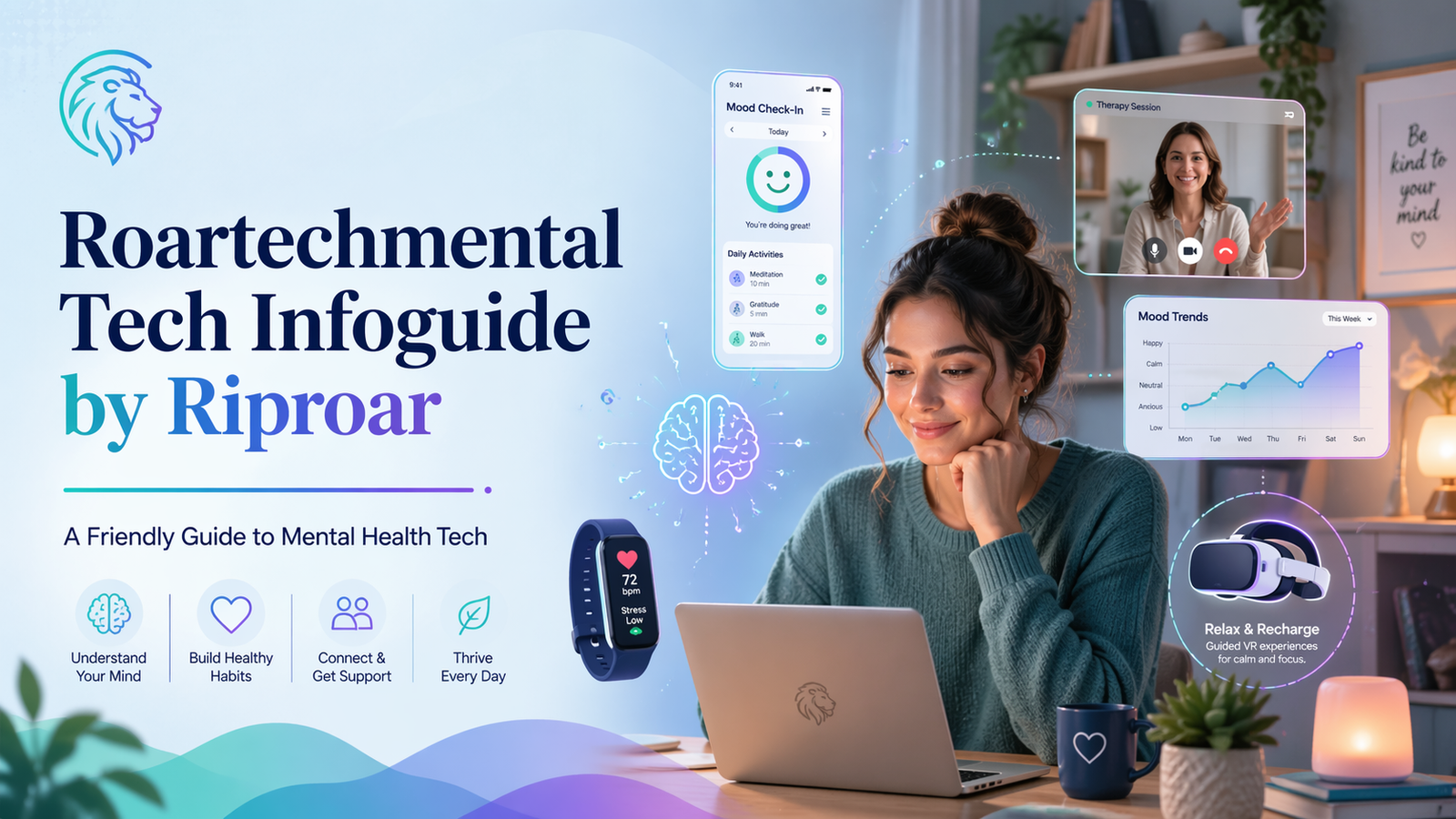
The keyword “roartechmental tech infoguide by riproar” appears to refer to a niche guide published on RoarTechMental. From the source page itself, the guide is centered on mental health technology—not just gadgets for the sake of gadgets, but apps, teletherapy, wearables, AI support tools, and even VR-based wellness and therapy experiences. The page frames these tools as support systems that can complement care rather than replace it.
And honestly… that angle makes sense.
A lot of people are overwhelmed right now. There are too many apps, too many promises, and too much hype. The National Institute of Mental Health says thousands of mental-health apps are available, but there is still limited regulation and limited information about how effective many of them really are. That’s a big reason guides like this get attention in the first place—they try to simplify the mess.
What Is the Roartechmental Tech Infoguide by Riproar?
At its core, the roartechmental tech infoguide by riproar looks like an educational guide for people trying to understand how digital tools fit into mental wellness. The page talks about testing tools, reviewing real use cases, and explaining how different categories of tech can be useful in everyday life. It also repeats a smart point: these tools work best when they support traditional care, not when they pretend to replace it.
That matters more than people think.
Because when a guide says, “Use this app and your life will change overnight,” that’s usually fluff. But when a guide says, “Here’s what this tool does, where it helps, and where you should be careful”… that’s actually useful. The RoarTechMental page leans more in that second direction.
What the Guide Seems to Cover
The guide’s content clusters around a few major areas. Here’s a simple breakdown.
| Area | What it includes | Why it matters |
|---|---|---|
| Mobile apps | Meditation, mood tracking, CBT-style tools | Easy daily support from a phone |
| Teletherapy | Video, messaging, remote counseling | More flexible access to care |
| Wearables | Smart rings, trackers, stress metrics | Helps users notice patterns in sleep and stress |
| AI support tools | Chat-style tools and personalized prompts | Can offer support between sessions |
| VR/immersive tools | Exposure therapy, calming environments | Creates controlled practice spaces |
This summary reflects the guide’s main sections on apps, teletherapy, wearables, AI-powered support, and immersive technologies, along with broader public guidance from NIMH and VA on how these tools are used in real mental-health settings.
Why People Search for a Guide Like This
Most people aren’t searching for mental health tech because they love technology. They’re searching because something feels off and they want help that fits into real life. Maybe they want to track mood changes. Maybe they want therapy without commuting. Maybe they just want support at 2 a.m. when things feel heavy. NIMH notes that digital tools can be convenient, private, lower-cost, and available around the clock, which explains why interest keeps growing.
But there’s the other side too.
People also know the internet is noisy. Some apps look polished and still don’t offer much. Some make claims they probably shouldn’t. The RoarTechMental guide taps into that frustration by trying to sort helpful tools from empty promises. And that’s probably the strongest thing about the keyword itself—it signals curation, not just content.
A Closer Look at the Main Categories
1. Mobile Mental Health Apps
The guide highlights app categories like meditation tools, mood trackers, teletherapy platforms, and CBT-based apps. It mentions examples such as Headspace, Calm, Daylio, Bearable, BetterHelp, Talkspace, Woebot, and Sanvello. The message is pretty practical: don’t download everything at once; start with one tool that matches one real need.
That’s good advice, actually.
NIMH also notes that mental-health apps can help with convenience, cost, access, and ongoing support, but it warns that effectiveness and trustworthiness vary a lot. So a guide that encourages people to choose slowly, check research, and think about fit is doing something useful—not glamorous, but useful.
2. Teletherapy and Remote Support
Another big part of the roartechmental tech infoguide by riproar is remote care. The source page describes teletherapy as a way to skip the commute and schedule help around real life. NIMH says virtual care can be effective for conditions including anxiety, depression, ADHD, bipolar disorder, and PTSD, while also making care more accessible for people with schedule or travel barriers.
Still, it’s not perfect.
Virtual care depends on internet access, platform quality, and privacy in the user’s environment. NIMH specifically recommends looking for secure platforms and providers with relevant experience. So yes, teletherapy can help. But picking the right provider and platform still matters a lot.
3. Wearables and Biofeedback
The guide also covers wearables—things like smart rings, fitness trackers, and devices that monitor sleep, stress, or heart-rate patterns. On the RoarTechMental page, wearables are presented as tools that help users notice patterns over time rather than magically “diagnose” them. That framing is important. These tools are better at showing trends than solving everything on their own.
And for a lot of people, patterns are the breakthrough.
If you notice your sleep gets worse before your mood drops, or stress spikes after certain habits, that can become useful self-awareness. Not a cure. Not a substitute for care. But a clearer picture, which is sometimes the first real step. NIMH also describes digital tools as a way to monitor progress and gather behavioral data that may support care.
4. VR and Immersive Mental Health Tools
This part is fascinating. The RoarTechMental content says VR is moving beyond gaming and into therapy, especially for exposure-based work and calming guided experiences. The VA also describes using VR platforms to help clinicians support people with PTSD and trauma-related conditions through safe, structured virtual environments and mindfulness activities.
So, no, it’s not sci-fi anymore.
It’s still a tool, though. Even the RoarTechMental content says the headset itself is not the treatment—the trained professional and the therapeutic process matter. That’s the right way to explain it. Tech can create access and structure, but human care still carries the weight.
What Makes a Good Mental Health Tech Guide?
A decent guide should do more than name apps. It should help readers judge quality.
The RoarTechMental page stresses:
- choosing tools based on a specific need
- checking whether professionals or research are involved
- reading the privacy policy
- comparing free versus paid value
- looking for tools that reduce stress instead of adding confusion
That privacy part deserves extra attention.
NIMH flags privacy as one of the major open concerns with mental-health apps, and NIST’s Privacy Framework exists specifically to help organizations identify and manage privacy risk while protecting individuals. In plain English: if a tool handles deeply personal emotional data, privacy shouldn’t be an afterthought. Ever.
Final Thoughts
The roartechmental tech infoguide by riproar seems to matter because it sits in a space where people need help making sense of fast-moving digital mental-health tools. Based on the source page, it is not just about trendy apps. It tries to explain how apps, teletherapy, wearables, AI support, and VR tools fit into a broader mental-wellness journey.
And that’s probably the right way to approach this whole topic.
Mental health tech can be helpful. Sometimes very helpful. But the best use of it is usually calm, practical, and realistic. Use the right tool for the right reason. Check privacy. Be skeptical of big promises. And whenever the issue is serious, let technology support real care—not replace it. That takeaway lines up with both the RoarTechMental guide and broader public guidance from NIMH and VA.